

Goodsky is a private, one-on-one residential retreat on the Sunshine Coast for adults living with PTSD, complex trauma, childhood trauma and nervous system dysregulation. We work with the body and nervous system, not only the story.
Contact Goodsky
Trauma is often treated as a problem of the mind, something to be talked through and reframed. Talk-based therapy helps a great many people, and it remains an important part of recovery.
But for many people, talking isn't enough on its own. Trauma doesn't just sit in your memories; it leaves a physical imprint, holding the nervous system in a prolonged state of defence long after the danger has passed. That's what keeps the hypervigilance, the broken sleep, the sense of being unsafe in your own body, going, even when you understand intellectually that the event is over.
"If trauma hasn't resolved through talk therapy alone, it isn't a failure of effort. It often means the work needs to reach the body and nervous system, not only the story."
Adapted from Greg Doney, Healing Trauma at a Cellular Level.
This is the thinking behind Goodsky's approach. Rather than working on symptoms in isolation, we use a bottom-up method that settles the nervous system first, then works through what's beneath the trauma at a pace your body can hold.
It isn't always flashbacks or obvious distress. For many people it's a quieter, constant state of being on guard:
Goodsky works with adults experiencing post-traumatic stress and trauma-related conditions – particularly where the body and nervous system are involved, and where standard approaches haven't brought lasting relief.
Post-traumatic stress following a traumatic event or events – including intrusive memories, flashbacks, hypervigilance and severe anxiety.
Trauma from prolonged or repeated experiences, often in childhood or within abusive relationships – with emotional dysregulation, negative self-perception and difficulty in relationships.
Early-life abuse, neglect or loss that has shaped development, attachment and the nervous system over many years.
Support for survivors of domestic violence, sexual assault, and chronic neglect, in a private and confidential setting.
Trauma arising from accidents, natural disasters, or exposure to war and combat.
PTSD that sits alongside depression, anxiety or other conditions, where the trauma and its effects need to be treated together.
Anonymised examples of how people have worked through PTSD and complex trauma with Goodsky's coordinated, one-to-one care.

After more than thirty years in a high-stress profession, Mark worked through PTSD, depression, and alcohol dependence in a coordinated program combining psychological, medical, and physical care.
Read Mark's story →
After trauma resurfaced within a difficult work environment, Beth worked through chronic PTSD, depression and anxiety in a coordinated program, including a pre-programme nervous system procedure.
Read Beth's story →
After severe burnout left her unable to work, Amy worked through complex trauma, Type 1 diabetes, and gut dysfunction in a coordinated residential program addressing mind and body together.
Read Amy's story →Names and identifying details have been changed to protect privacy, and each case study is published with consent. Individual results vary.
When trauma hasn't resolved through standard care, the reasons are often physical as much as psychological. These are some of the systemic drivers our assessment looks at:
Trauma can hold the body in a prolonged fight, flight or freeze state. Settling that over-activation is often where lasting change begins.
People often carry trauma in the musculoskeletal system as chronic tension and pain. Releasing the physical residue is part of the work, not separate from it.
Prolonged stress dysregulates cortisol and other hormones and disrupts the gut, affecting sleep, mood and the capacity to feel calm.
Disrupted sleep, nightmares and a system that won't switch off keep the body exhausted and on alert. Restoring sleep and regulation is foundational.

No two plans are identical, but most people move through the same stages – we build a complete picture before any treatment begins, then bring the whole team together around it.
An in-depth, confidential look at your history and timeline – to understand the root causes, at a pace that feels safe.
Targeted private pathology – gut microbiome, hormones, genetics, neurotransmitter and nutritional markers – to find what's physically feeding how you feel.
A plan shaped around your specific needs and results, coordinated with your GP or treating doctor where medical input is needed.
Your dedicated team works together through the residential phase, combining psychological, body-based and biological care – paced to what your nervous system can hold.
Structured pre- and post-residential support so the progress you make holds once the residential phase ends.
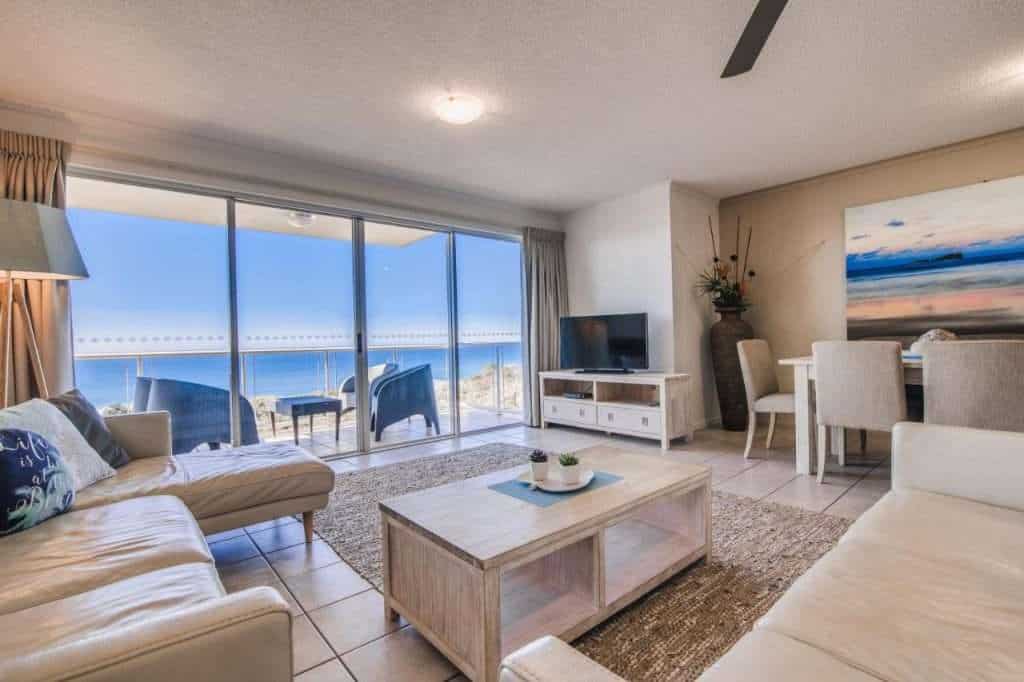
A private, self-contained resort apartment for the residential phase – not a shared facility. Stays are typically around 21 days but can be longer or shorter depending on your needs.
Intensive residential care plus structured pre- and post-residential support for continuity.
A dedicated multidisciplinary team working with you one-on-one throughout your stay.
A close family member, partner or support person can stay with you during the residential phase, and access shared therapies such as couples or relationship sessions.
An immersive amount of one-on-one therapeutic time over the program.
A small guest-services team to help you settle in and get to your appointments throughout your stay.
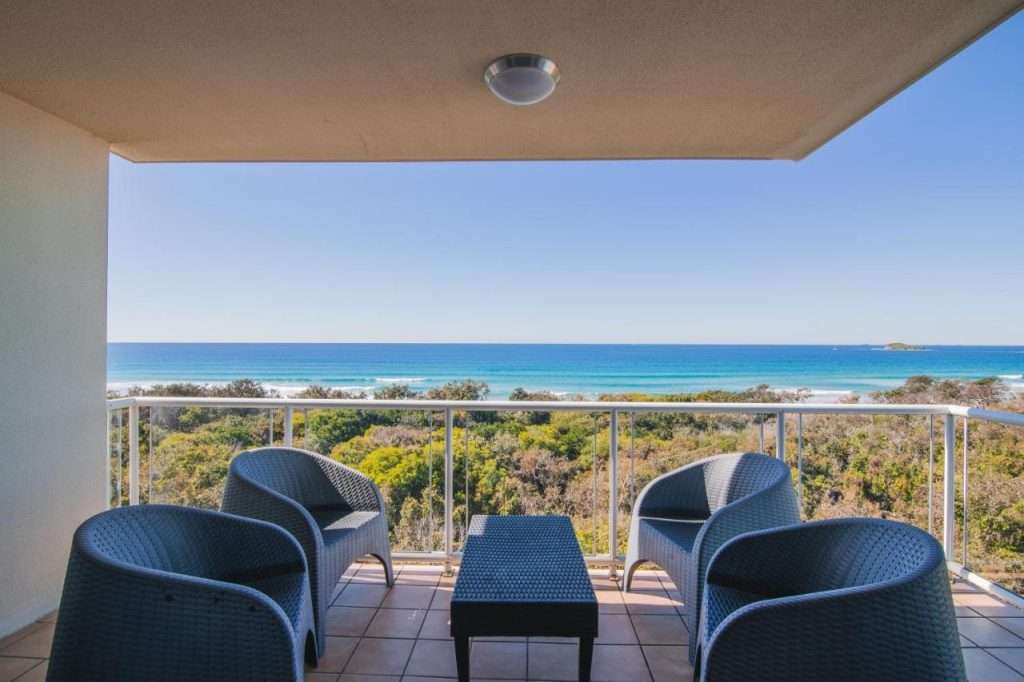
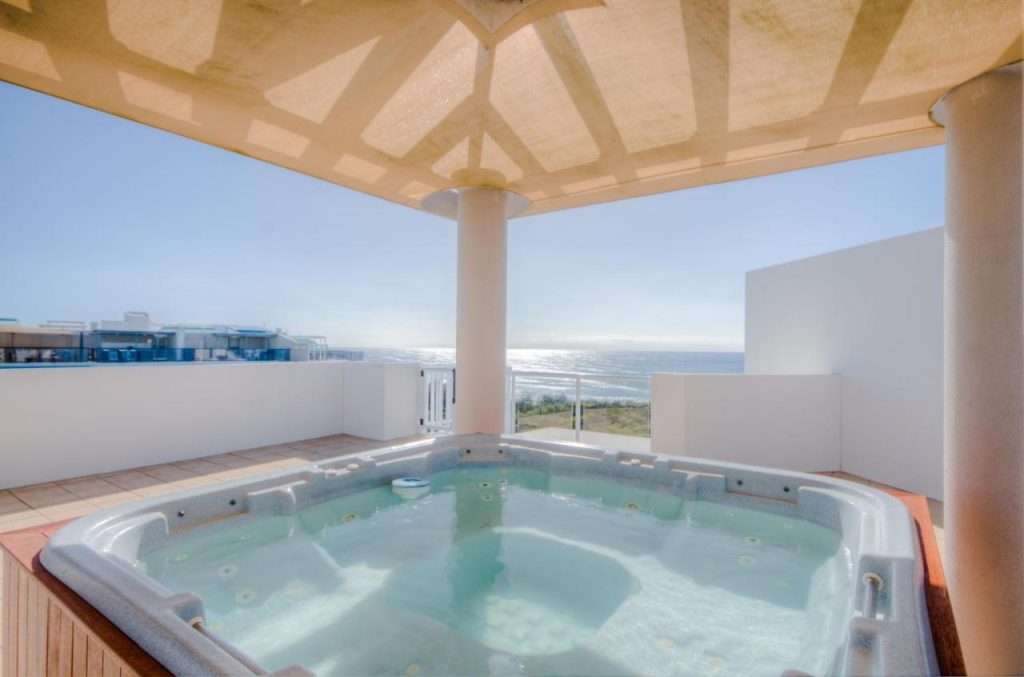
The residential phase is based at the Atlantis Marcoola Beachfront Resort on the Sunshine Coast – spacious, fully self-contained apartments with ocean views, private balconies, a heated pool and direct beach access. Treatment teams are based at professional practice facilities across the coast, which keeps the program more affordable and gives access to the best practitioners in the region.
Most care addresses one dimension of a person: a psychotherapist works on your thoughts, a GP on your medication, a dietitian on your food. At Goodsky, one integrated team works on all of it together, in the same program, because trauma rarely affects just one part of a life.
Talk-based, trauma-informed psychotherapy is a core part of every program, working alongside somatic (body-based) therapies so the verbal and physical sides of recovery support each other – always at a pace your nervous system can hold.
Medical and functional assessment, plus bodywork and movement, to release the physical tension and dysregulation that trauma leaves behind.
Targeted pathology and naturopathic support for the gut, hormones and inflammation that research increasingly links to mood, sleep and regulation.
Practical support with sleep, nutrition and routine, so the gains you make are ones you can carry home and keep.
Because the team works together on one plan rather than as separate appointments, the parts join up, which is often what's been missing.
See all therapiesFor trauma recovery we recommend in-person care, because much of the work is hands-on and body-based. A structured outpatient option is available for people on the Sunshine Coast or in Brisbane – or you're welcome to arrange your own accommodation nearby rather than staying at the resort. We'll talk through what makes sense for your situation.

A decade refining a personalised, trauma-informed model of residential care for adults.
Every guest works privately with their own multidisciplinary team. No group programs, no shared schedules.
Wherever possible, Goodsky works alongside your existing GP or treating doctor for continuity, and can arrange additional clinical input where it's needed.
A short, well-established questionnaire that can help you understand whether you're experiencing symptoms of PTSD. It isn't a diagnosis – but it can be a useful first step, and something to bring to a conversation with us.
Take the PCL-5 →
Private, one-to-one care for depression, anxiety, chronic stress and burnout.
Learn more →
Individualised support for teenagers in a safe, age-appropriate environment.
Learn more →
Structured support that fits into everyday life, across Australia and New Zealand.
Learn more →Standard therapy is usually one session a week, focused on talking. Goodsky is an immersive, one-on-one residential program that combines trauma-informed psychotherapy with body-based, medical and lifestyle care – designed for people for whom weekly talk therapy hasn't been enough on its own.
Talking is part of the work – trauma-informed psychotherapy is central to every program – but it's paced to what feels safe and combined with body-based therapies. You won't be pushed to recount your trauma in detail before you're ready; settling the nervous system comes first.
Yes. Many guests arrive while taking medication, and being on medication is no barrier to attending. Goodsky doesn't manage or supervise your medication – that stays with the GP or psychiatrist who prescribed it – and we're glad to work alongside them for continuity of care.
Programs typically include a residential phase with structured preparation beforehand and outpatient support afterward. The exact length is shaped around what each person needs, and is discussed during your initial confidential consultation.
Yes. A close family member, partner or support person can stay with you during the residential phase, and can access shared therapies such as couples or relationship sessions.
A senior member of the team will have an unhurried, confidential conversation with you about what's been happening – with no obligation. If Goodsky isn't the right fit, we'll do our best to point you toward something that is.

Trauma often shows up in the body as much as in the mind – the constant edge, the broken sleep, the sense of being unsafe. Why that matters for recovery.
Read article →
Goodsky co-founder Greg Doney on why some trauma needs to be resolved at a biological level, not only talked through.
Read article →
Why progress can plateau with weekly therapy, and what changes when treatment happens in an intensive, residential setting.
Read article →In crisis? Goodsky is a private residential retreat and is not an emergency service. If you or someone you know needs immediate support, call Lifeline on 13 11 14, or 000 in an emergency.
Goodsky provides individualised mental health care. Treatment approaches and outcomes vary from person to person, and nothing on this page is a guarantee of a particular result. Information here is general and not a substitute for personalised medical advice.
